Understanding Municipal Property Taxes
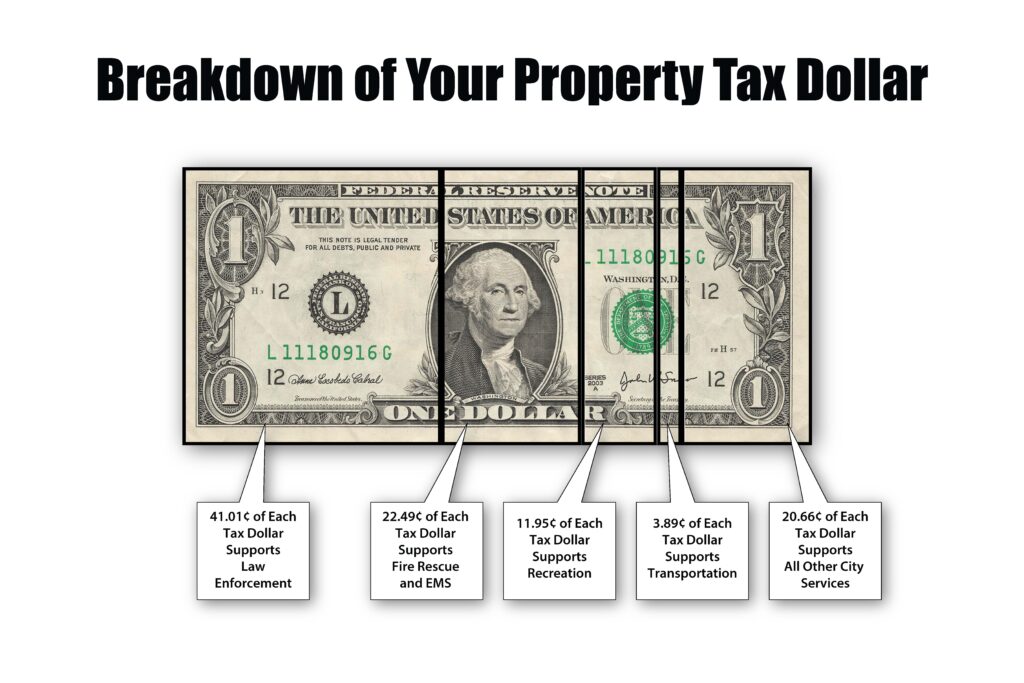
Property taxes (ad valorem taxes) are a primary revenue source used to fund essential local services in Sanford. Unlike federal or state taxes, property tax revenues generated in Sanford stay within the community to support municipal operations, infrastructure, and public safety.
Where Your Sanford Property Tax Dollar Goes
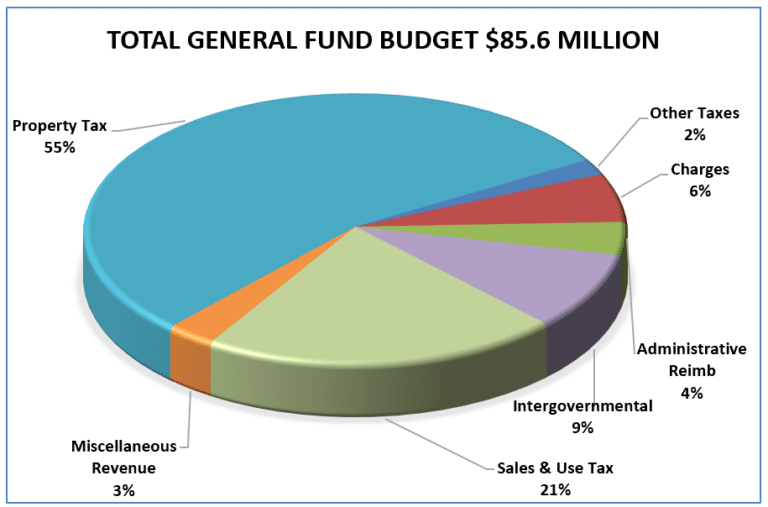
Property tax revenue accounts for 55% of the City of Sanford’s $85.6 million General Fund budget.
Property tax revenues directly support:
Public Safety: 24/7 coverage by the Sanford Police Department and Sanford Fire Department.
Infrastructure & Public Works: Maintenance of local roads, bridges, storm systems, and municipal facilities.
Community Development: Planning, code enforcement, and building services.
Parks & Recreation: Operation and upkeep of city parks, community centers, and public events.
See the chart below to understand the revenue sources that fund the City’s budget.
Amendment 3: INCREASED HOMESTEAD EXEMPTION; LOWER CAP ON INCREASES IN NON-HOMESTEAD PROPERTY ASSESSMENTS
This amendment increases the homestead exemption, for all non-school taxes, to $150,000 in 2027 and $250,000 in 2028, and adjusts for inflation thereafter. It requires the Legislature to prescribe a uniform procedure for counties and municipalities, for their respective levies, to increase the homestead exemption up to full assessed value, and allows special districts, subject to referendum approval, to do the same. Persons who are not Florida residents on December 31, 2026, will receive the existing homestead exemption upon qualifying for a homestead exemption, with the increased homestead exemption beginning with the fifth year of exemption, to the extent permitted by the U.S. Constitution. This amendment reduces the annual cap on assessment increases for non-homestead properties from 10% to 5%. This amendment requires counties and municipalities to use property taxes solely for public safety, education and schools, infrastructure, natural resources, bond debt service, retirement benefits for employees, and operations and administration. Other expenditures may be approved by county officers or county or municipal governing bodies unless prohibited by general law, notwithstanding Article VII, Section 9(a) of the Florida Constitution, which allows counties and municipalities to levy property taxes for their respective purposes. This amendment takes effect January 1, 2027.
What Is Being Proposed
Proposed state Constitutional Amendments regarding ad valorem property taxation may impact future local revenues and property valuations.
Homestead Exemptions: Proposals under consideration include expanding non-school homestead exemptions up to $250,000 over a multi-year phase-in period. School district taxes would remain unaffected.
Assessment Caps: Adjustments to non-homestead properties (commercial and rental units) include reducing annual assessment value growth caps from 10% to 5%.
Residency Requirements: Proposed adjustments require new Florida residents to complete a 5-year residency period before qualifying for expanded homestead tax exemptions.
For updates on proposed state tax legislation or to check individual property tax details, visit the official Seminole County Tax Collector Portal.
How Does This Affect Me?
Seminole County Property Appraiser David Johnson presented a detailed overview of Amendment 3 and property tax legislation during the Sanford City Commission meeting on Monday, September 14, 2026.
In this presentation, Property Appraiser Johnson breaks down how current and proposed property tax legislation impacts Sanford residents, local property valuations, and exemptions.
Where to Learn More
The Florida League of Cities has compiled helpful information on understanding property taxes and how they affect you. Click on the link below to access this resource.